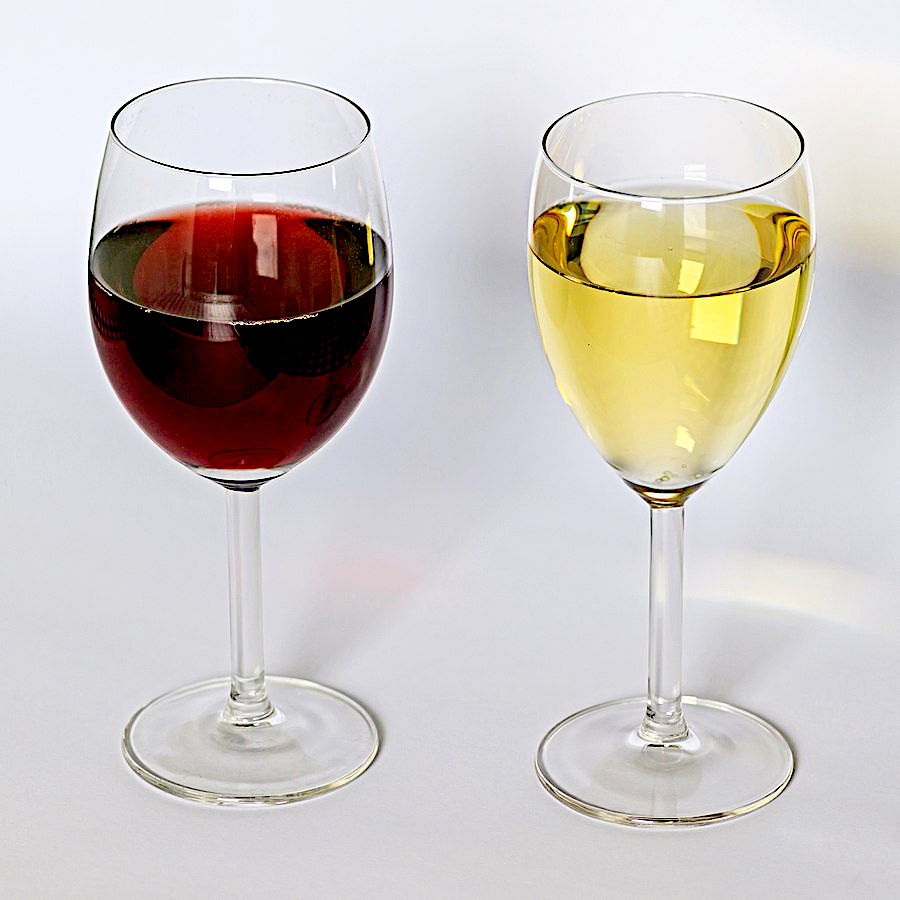


Spain is one of the world’s leading wine-producing countries and boasts an extraordinary diversity of grape varieties. From the elegant Tempranillo of Rioja to the refreshing Albariño of Galicia, the bold Monastrell of the Mediterranean coast, and the aromatic Verdejo of Rueda, each wine region offers its own unique personality thanks to its native grapes and exceptional growing conditions.
Understanding the different Spanish grape varieties is one of the best ways to appreciate the character of each wine, discover new styles, and choose the perfect bottle for any occasion. While the Denomination of Origin (DO) is an excellent starting point, the grape variety itself largely determines a wine’s aromas, flavors, structure, and aging potential.
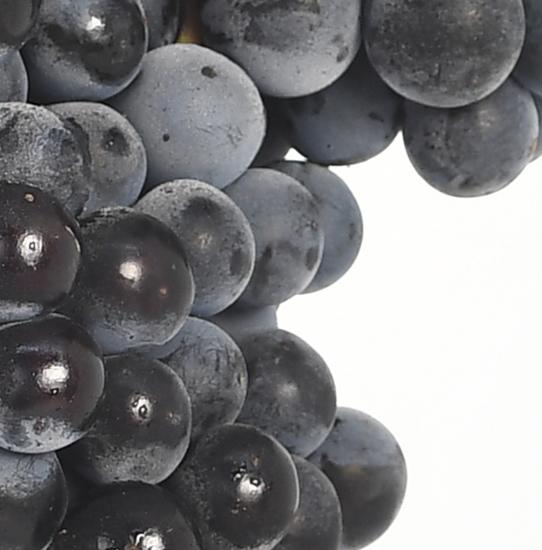
In this guide, you’ll discover the most important Spanish wine grapes, where they are grown, their key characteristics, and the styles of wine they produce. You’ll also find practical tips for choosing wines based on grape variety and learn which Spanish regions showcase each grape at its very best.
Contents
- Why Does Spain Have So Many Grape Varieties?
- Native and International Grape Varieties
- Main Spanish Red Grape Varieties
- Main Spanish White Grape Varieties
- Which Grapes Are Grown in Each Region?
- How to Choose Wine by Grape Variety
- Frequently Asked Questions
Why Does Spain Have So Many Grape Varieties?
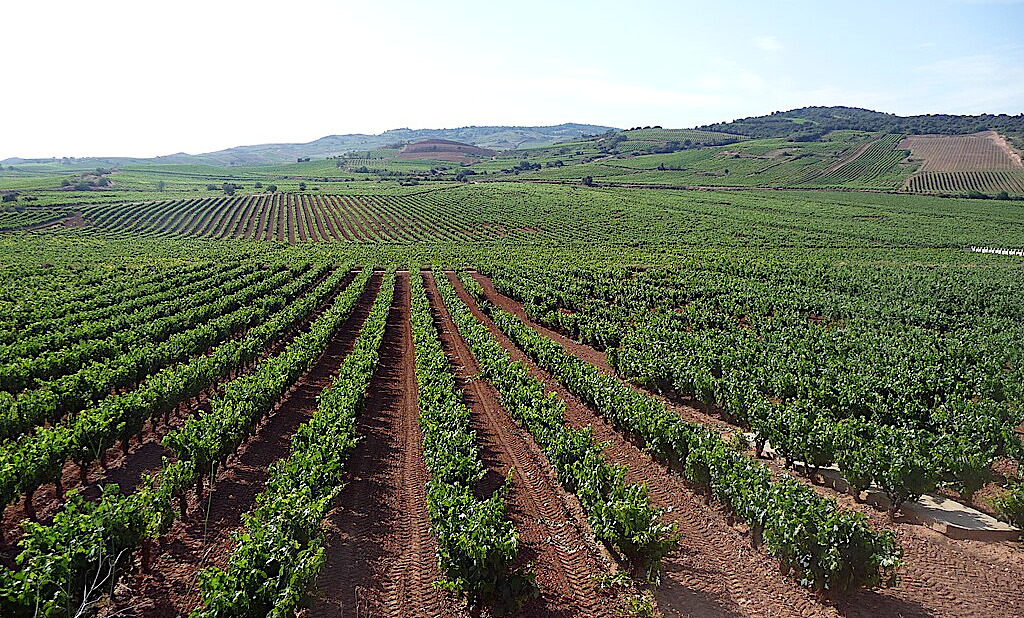
Spain has the largest vineyard area in the world, with nearly one million hectares dedicated to grape cultivation. Combined with the country’s remarkable climatic and geographical diversity, this vast vineyard landscape has allowed dozens of grape varieties to evolve and thrive under very different growing conditions over the centuries.
Today, more than one hundred grape varieties are cultivated across Spain, many of them native to the country and rarely found elsewhere. This rich diversity makes Spain one of the world’s most exciting destinations for wine lovers.
An Extraordinary Diversity of Climates
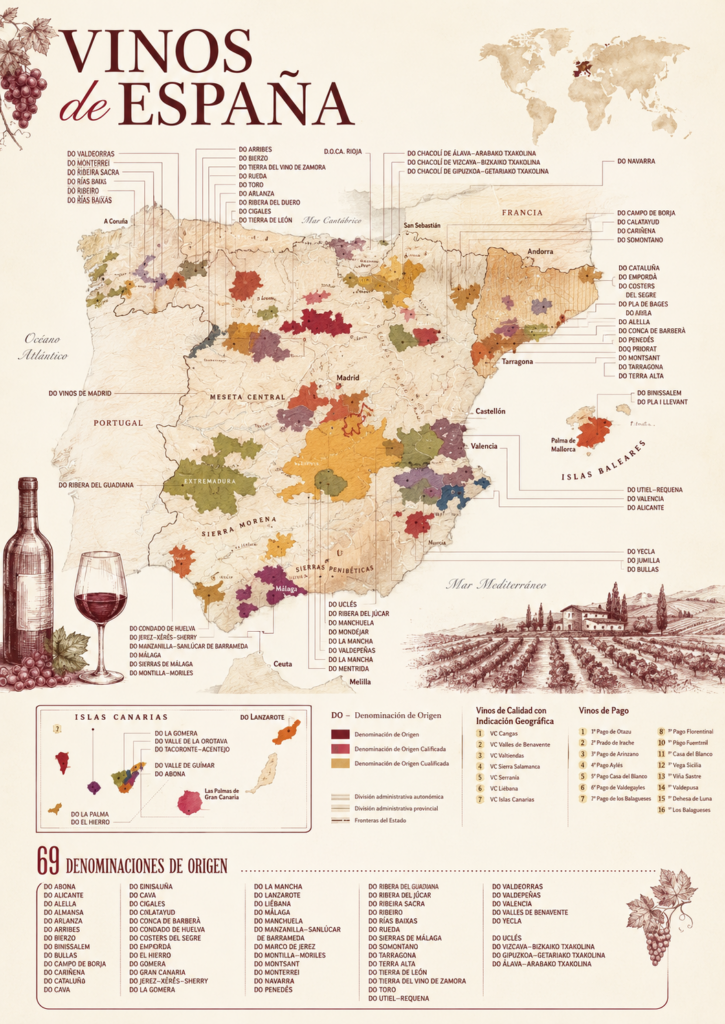
Spain is home to some of Europe’s most varied wine-growing landscapes. Within just a few hundred kilometers, the climate can change dramatically—from the cool, rainy Atlantic coast to the warm Mediterranean shoreline or the continental interior with its hot summers and cold winters.
This diversity allows every grape variety to find the ideal environment in which it can fully express its character.
The Influence of the Atlantic Climate
Regions such as Galicia and Spain’s northern Atlantic coast enjoy mild temperatures, abundant rainfall, and high humidity. These conditions are ideal for white grape varieties such as Albariño and Godello, which produce fresh, aromatic wines with naturally vibrant acidity.
The Mediterranean Character
Spain’s Mediterranean coastline benefits from long hours of sunshine and dry summers, making it the perfect home for varieties such as Monastrell, Garnacha, and Cariñena. These grapes produce rich, ripe wines with concentrated fruit flavors and excellent structure.
The Continental Interior
The central and northern inland regions experience cold winters and very hot summers. The significant temperature differences between day and night encourage slow ripening in varieties such as Tempranillo, resulting in wines with remarkable balance, complexity, and aging potential.
The Importance of Altitude
Many Spanish vineyards are planted between 600 and 1,000 meters (2,000–3,300 feet) above sea level. These higher elevations help preserve the grapes’ natural acidity, even during the hottest summers, producing fresher and more balanced wines.
More Than Two Thousand Years of Winemaking History
Spain’s winemaking tradition dates back more than two thousand years to the Phoenicians, Greeks, and Romans. Over the centuries, growers carefully selected the grape varieties best suited to each region, creating one of the world’s richest viticultural heritages.
Thanks to this long history, Spain has preserved a remarkable collection of native grape varieties that reflect the identity of each wine region and represent one of the country’s greatest gastronomic treasures.
Native and International Grape Varieties
When exploring the grape varieties grown in Spain, it’s useful to distinguish between native (indigenous) grapes and international varieties. Although both are widely cultivated, Spain’s native grapes are what truly give Spanish wines their distinctive identity.
What Are Native Grape Varieties?
Native grape varieties are those that have evolved over centuries within Spain and form an essential part of the country’s winemaking heritage. Many of them are grown almost exclusively in specific regions and are responsible for the unique personality of many Spanish wines.
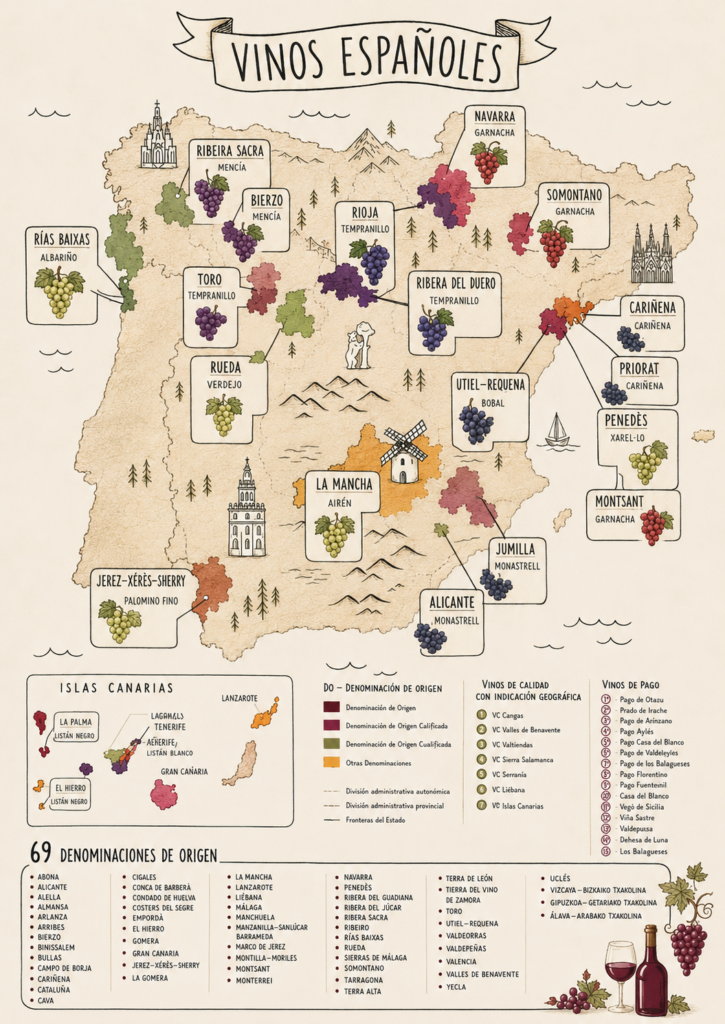
The most important native grape varieties include:
- Tempranillo, Spain’s flagship red grape.
- Garnacha, one of the country’s most widely planted varieties.
- Monastrell, the signature grape of southeastern Spain.
- Mencía, native to northwestern Spain.
- Bobal, closely associated with Utiel-Requena.
- Cariñena, essential in Priorat and Aragón.
- Graciano, prized for adding freshness and aging potential.
- Albariño, one of Spain’s finest white grape varieties.
- Godello, increasingly recognized around the world.
- Verdejo, the emblematic white grape of Rueda.
- Airén, Spain’s most widely planted white grape.
- Palomino Fino, the essential grape behind Sherry wines.
- Xarel·lo, one of the foundations of Cava.
Together, these varieties showcase the extraordinary diversity of Spanish viticulture and are one of the main reasons why Spanish wines possess such a distinctive and recognizable character.
What Are International Grape Varieties?
Over the past few decades, many Spanish wineries have also introduced grape varieties originating from other countries, particularly France. These grapes allow producers to craft internationally styled wines and often blend beautifully with native Spanish varieties.
The most commonly planted international grape varieties in Spain include:
- Cabernet Sauvignon
- Merlot
- Syrah
- Chardonnay
- Sauvignon Blanc
- Petit Verdot
Although these international varieties produce outstanding wines, the true identity of Spanish wine remains firmly rooted in its indigenous grapes, whose adaptation to Spain’s diverse climates and soils is the result of centuries of viticultural tradition.
In the following sections, we’ll explore Spain’s most important red and white grape varieties, their characteristics, the regions where they thrive, and the styles of wine they produce.